
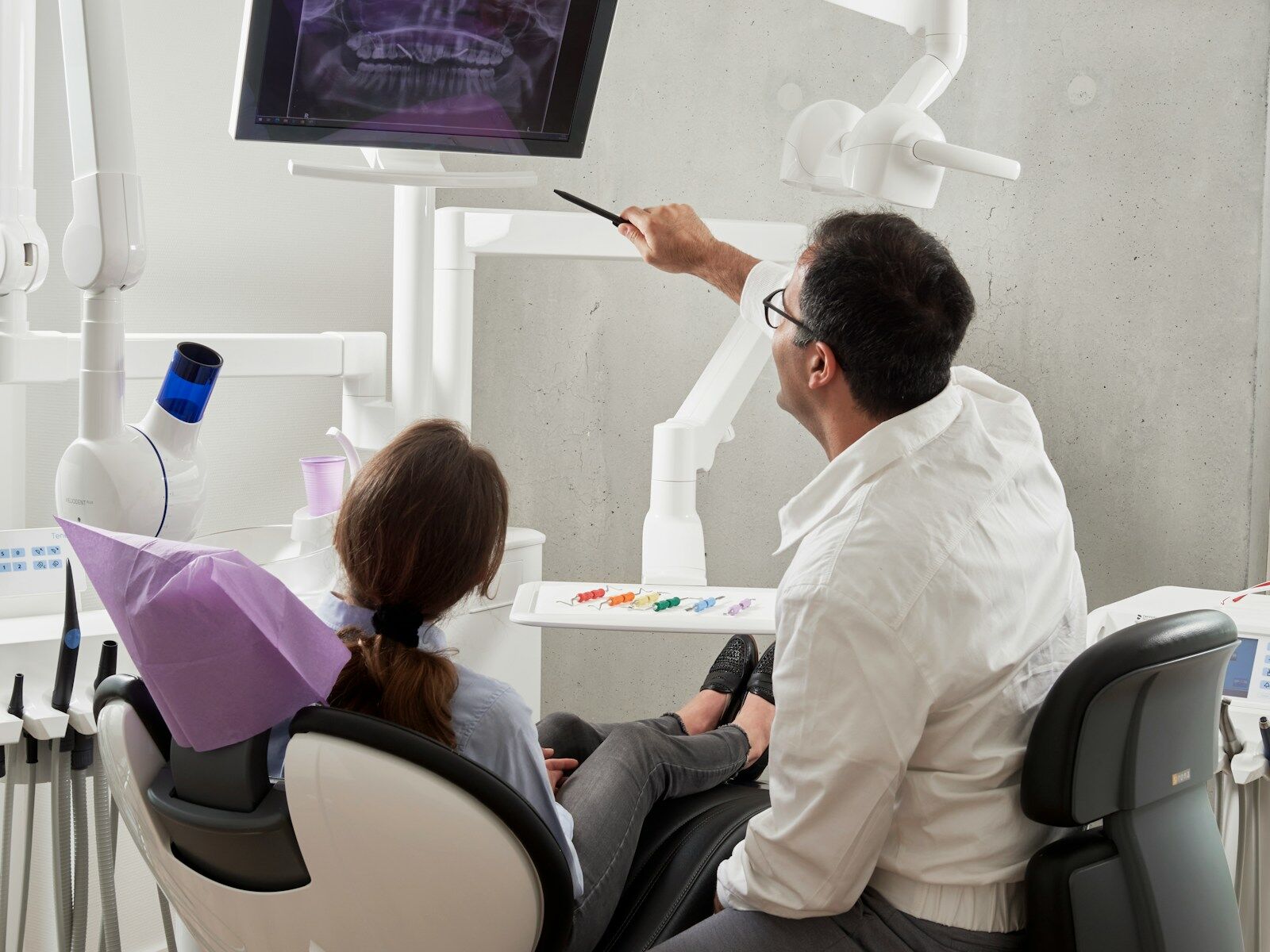
During routine checkups, a dentist typically examines your teeth for cavities, cracks, enamel erosion, and problems with fillings or crowns. They also check your gums for signs of disease, assess how your upper and lower teeth fit together, and may examine your tongue, cheeks, and other soft tissues for unusual changes.
Depending on your dental history and needs, they may recommend dental X-rays to detect problems that aren’t visible during a regular exam.
You can arrange a professional cleaning during the same visit, but it’s a separate service. If you’re visiting a dentist in Clarksville, knowing what happens during a checkup can help you feel more prepared and understand your dentist’s recommendations.
Here is a quick checklist of what the dentist will check:
- Teeth, cavities, cracks, and existing dental work
- Gums and the tissues supporting your teeth
- Bite alignment, tooth wear, and jaw discomfort
- Soft tissues of the mouth, lips, tongue, etc.
- Uses X-rays when needed to detect hidden issues between teeth or under the gumline.
- Any symptoms or changes in your oral health.
What Does a Dentist Check During a Routine Exam?
An extensive exam doesn’t just look for cavities. Your clinician checks all parts of your mouth while you sit in the chair to safeguard your overall health. Knowing what a dentist checks during an exam can demystify the visit and ease the fear and uncertainty that may come with it.
1- Teeth and Existing Dental Work
Your dentist uses a small mirror and specialized instruments to check all visible tooth surfaces. They are looking for:
- Early Tooth Decay: Finding soft spots or cavities before they hurt.
- Structural Damage: Detecting tiny cracks, chips, or chipped enamel resulting from grinding.
- Condition of Dental Work: Keeping current fillings, crowns, and bridges tight, intact, and leak-free.
- Sensitivity Concerns: Areas with thin enamel and exposed roots.
These problems can be treated less invasively if identified in the early stages.
2- Gums and Supporting Tissues
Well-maintained gums are crucial to keeping your teeth healthy. This examination checks your gums for redness, swelling, and bleeding, which can be early indicators of gingivitis.
They may also take X-rays of your mouth or use a small probe to measure the depth of the gap between your teeth and gums. Shallow pockets are good, while deeper pockets may indicate more advanced gum disease, such as periodontitis. Early diagnosis of gum changes helps keep your natural teeth stable and prevents bone loss.
3- Bite and Jaw Function
Your dentist briefly examines how your top and bottom teeth fit together when you bite down. With misaligned teeth or uneven bites, teeth may wear down unevenly, the enamel may chip, or the mouth may feel discomfort.
The dentist will listen for clicking or popping, and ask if it hurts when you open and close your mouth, and will feel your jaw joint (TMJ) to see if it moves smoothly.
4- Tongue, Cheeks, and Other Soft Tissues
During a routine oral exam, the dentist will examine the soft tissue of your mouth. The dentist examines the lips, inside the cheeks, inside the roof of the mouth, inside the floor of the mouth, and the tongue.
They check for any of the following: strange red or white spots, a sore that does not heal,
They look for unusual red or white patches, non-healing sores, or unexpected swelling. As part of a standard oral cancer screening, they may also feel your neck and under your jawline for swollen lymph nodes or firm lumps. Screening is a quick preventive measure, and most unusual findings turn out to be minor irritations rather than serious conditions.
Will a Dentist Take X-Rays During a Routine Exam?
X-rays aren’t automatically required at every checkup. Instead, they recommend them based on your health history, age, current symptoms, and risk for tooth decay.
Visual exams reveal only what’s visible above the gumline. Dental X-rays allow the dentist to see:
- Cavities forming between tight teeth where visual tools cannot reach.
- Bone loss beneath the gums caused by advanced periodontal disease.
- Infections, cysts, or abscesses at the roots of the teeth.
- The position of unerupted or impacted wisdom teeth.
Questions to Ask About X-Rays
If imaging is recommended during your visit, feel free to ask:
- Why do I need X-rays today?
- What specific areas are you looking at in these images?
- Can my previous dental office send over my recent X-rays?
Current guidelines emphasize taking images only when clinically necessary to ensure safe, personalized care.
Is a Routine Dental Exam the Same as a Cleaning?
People often group these services together, but a dental exam and a professional cleaning are distinct procedures with different goals.
Dental Exam
A dental exam is a complete health check the dentist performs to detect cavities, gum disease, and other underlying issues early. It focuses on diagnosing oral health problems and planning any treatment you might need.
Dental Cleaning
A dental cleaning is a preventive procedure a dental hygienist performs to remove built-up plaque and hardened tartar. It removes surface stains and keeps your teeth and gums clean and healthy.
What Happens if the Dentist Finds a Problem?
If your dentist spots an issue, there is no need to panic. Finding a problem early gives you the most affordable and comfortable care options.
Depending on what is found, your dentist may:
- Monitor the Area: Watch a minor spot at future visits without immediate treatment.
- Provide Preventive Care: Apply a concentrated fluoride treatment or sealants to protect vulnerable enamel.
- Schedule Restorative Care: Plan a follow-up appointment to fix a cavity, replace a worn filling, or repair a cracked tooth.
- Recommend Specialist Care: Refer you to a specialist (like a periodontist or endodontist) for advanced concerns.
Before leaving, ask what they found, why they recommend treatment, what other options exist, and what the estimated costs will be. You are always in control of your care plan.
How Long Does a Routine Dental Exam Take?
A standard dental exam typically takes about 15 to 30 minutes. If your visit includes an exam, full X-rays, and a professional cleaning, plan to spend 45 to 60 minutes in the office.
If it has been several years since your last dental visit, your initial checkup may take a little longer. The team will take extra time to review your health history, take baseline X-rays, and discuss your goals.
How Often Should You Get a Dental Exam?
Going to the dentist regularly (usually every six months) is generally recommended, but not everyone should go at the same interval.
- Every 6 Months: Recommended for most patients with healthy teeth and gums to keep their oral health on track.
- Every 3-4 months: Recommended for individuals with a history of gum disease, frequent cavities, diabetes, or a compromised immune system.
- Once a Year: Appropriate for patients with consistently healthy gum tissue and low risk of decay.
Talk with your clinician to determine the visit schedule that best matches your oral health risks.
How to Prepare for a Routine Dental Exam in Clarksville
Making an appointment is an important step to ensure your visit goes smoothly, easily, and without stress.
Pre-Exam Checklist
- Update Medical Info: Carry a list of your current medications, health conditions, and recent surgeries.
- Note Your Symptoms: Record any recent sensitivity, jaw pain, bleeding gums or tooth discomfort.
- Past Records: Ask your current dentist to send your most recent X-rays so you don’t have to have new Ones taken.
- Communicate Concerns: Let staff know if you have dental anxiety, tend to gag easily, or need any physical changes.
Confirm your appointment details: Before your visit, check with your Clarksville dental care provider whether your appointment includes a routine dental checkup, professional cleaning, or both.
Schedule a Dental Checkup Today
A standard dental checkup helps protect your smile and can catch minor issues early before they cause pain. From six-month checkups to returning after a few years have passed, our caring staff ensures high quality care is comfortable and easy.
Frequently Asked Questions
Does a dentist check for oral cancer during a routine exam?
Yes. Dentists will examine your mouth, tongue, floor of your mouth and palate, and feel the neck and jaw for abnormal growths. It is a brief, painless test that is part of a thorough exam.
Can a dentist detect cavities before they cause pain?
Yes. Visual examination, diagnostic tools, and X-rays help identify decay early, before it affects the nerve and causes a toothache.
Should I always get X-rays?
No, they are not scheduled automatically; they are taken only when warranted based on your personal risk factors, dental history, and symptoms.
Does a routine exam include cleaning?
Not always. Although theyare often scheduled together for convenience, the exam (a diagnostic assessment by the dentist) and the cleaning (plaque removal by the hygienist) are separate services.
What if I haven’t seen a dentist in years?
That is completely okay. Your dental team will perform a gentle examination, take updated images, assess your current oral health, and help you create a comfortable plan to get back on track without judgment.






Leave A Comment