
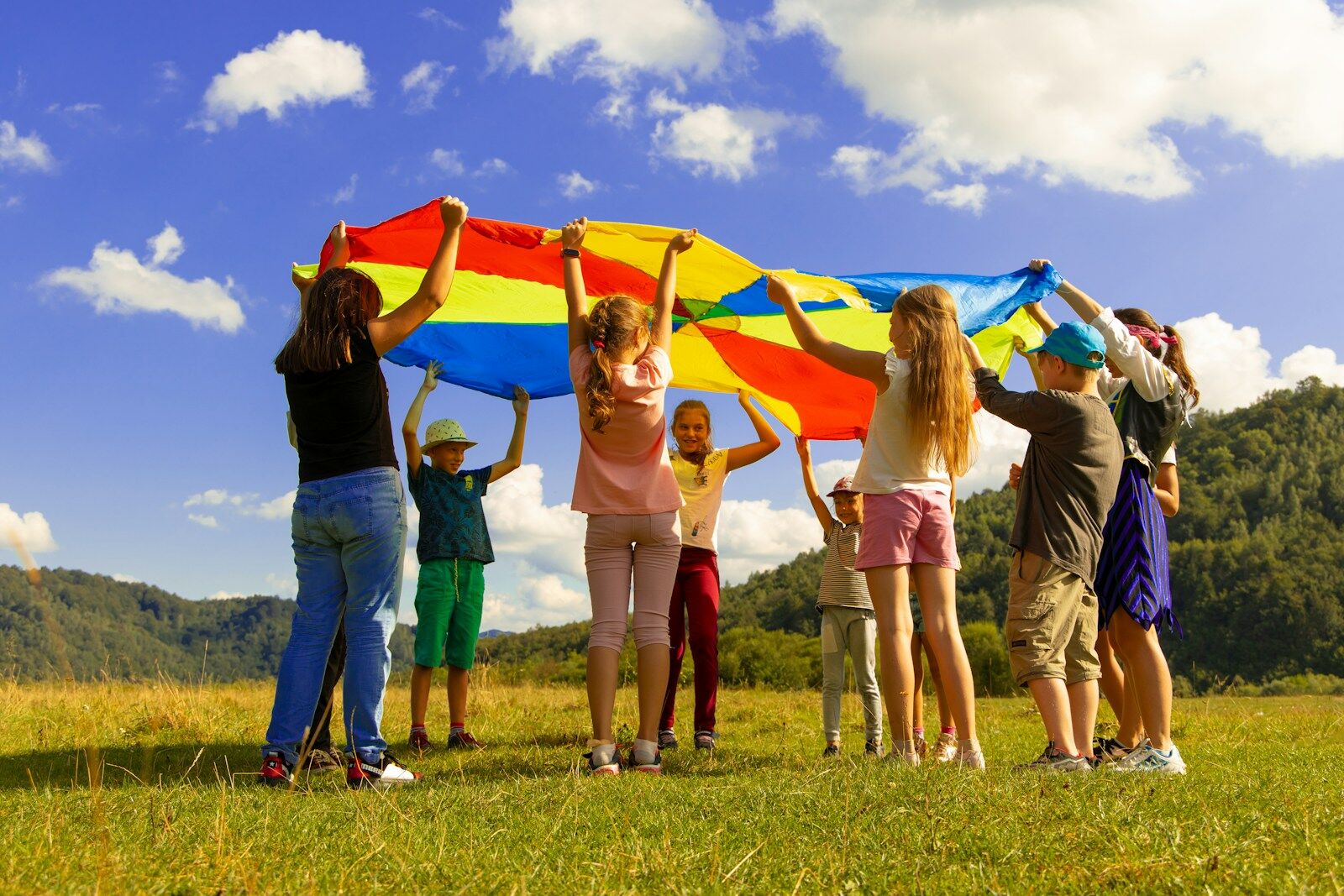
Most of us have a clear picture of what learning looks like: desks, books, a whiteboard at the front. But spend any time around curious, energetic children and it quickly becomes obvious that some of the best learning happens nowhere near a classroom.
Outdoor and experiential education has been gathering momentum for years, and for good reason. The evidence is compelling, the results are visible, and children who spend meaningful time learning outside tend to carry those experiences with them for a very long time.
Getting Outside Changes How Children Think
There is something about being outside that shifts the way children engage with the world. Problems that feel abstract on a page become real and immediate when you are actually in the middle of them. Measuring a garden bed, tracking the weather, or studying the life cycle of a bug in its natural habitat gives learning a texture that is hard to replicate indoors.
Children who learn in natural environments tend to show better concentration, stronger memory recall, and a greater willingness to ask questions and take intellectual risks. When the stakes feel lower and the setting feels more open, curiosity tends to flourish.
It Is Not Just About Science and Nature
Outdoor learning is often associated with forest schools or nature study, but its benefits extend much further. Drama performed in an open courtyard, maths problems solved using physical objects, history lessons brought to life by a visit to a local landmark, art inspired by seasonal change: all of these draw on the same principle that context and experience deepen understanding.
Team challenges and problem-solving activities carried out outside also build the kind of social and emotional skills that are genuinely difficult to teach in a formal classroom setting. Learning to lead, to listen, to disagree constructively, and to celebrate a shared achievement are lessons that stick.
What Schools Are Doing Differently
Read on for some tips from a school that puts outdoor learning at its heart.
Schools that weave outdoor learning into their everyday routine, rather than treating it as an occasional treat, tend to see the most sustained benefit. When going outside is simply part of how a school operates, children stop seeing it as special and start seeing it as normal. That normalisation matters, because it means the learning becomes consistent rather than occasional.
The Role of Parents
Parents can extend this approach at home without any specialist equipment or expertise. A walk that turns into a conversation about the trees, the weather, or the buildings you pass. A garden project that becomes a lesson in patience and science. A trip to a market that sparks questions about where food comes from.
Children are naturally curious about the world around them. The job of parents and schools is simply to keep that curiosity alive, and getting outside is one of the most straightforward and enjoyable ways to do it.
A Different Kind of Confidence
Children who are given the space to explore, to get things wrong in low-pressure environments, and to figure out solutions through hands-on experience develop a particular kind of confidence. It is not just academic confidence, though that often follows, but a broader belief that the world is something to engage with rather than observe from a distance.
That kind of confidence, built early, has a way of showing up in everything a child does, from how they approach a tricky maths problem to how they handle the challenges of growing up.





Leave A Comment