

Another one to add to the list of things that were never a thing when I was a child – coding! I can still remember our first at-home computer that my step-dad bought for home use when I was in my early teens. I was fascinated by it, and quickly taught myself how to use it. Fast forward 25 (or more) years, and as technology evolves, so does the education curriculum around it.
Computing lessons now explore coding to teach children how to use computers and make them work how they want. Lessons start as young as five years old and help children develop digital literacy and an awareness of our technologically advanced world. In this post, we explore the reasons why lessons on coding are vital for children in 2023 and thoughts from a private school in Wandsworth.
What is coding for children, and what does it involve?
Coding for children refers to the practice of teaching computer programming and coding skills to children at a young age. It involves introducing children to the basic principles of coding and allowing them to learn programming languages and develop their own software applications, games, websites, or interactive projects. No longer are our children only interested in watching TV, even if that TV is educational programmes for kids. They want to know how to build things, using the tech that they are exposed to every single day.
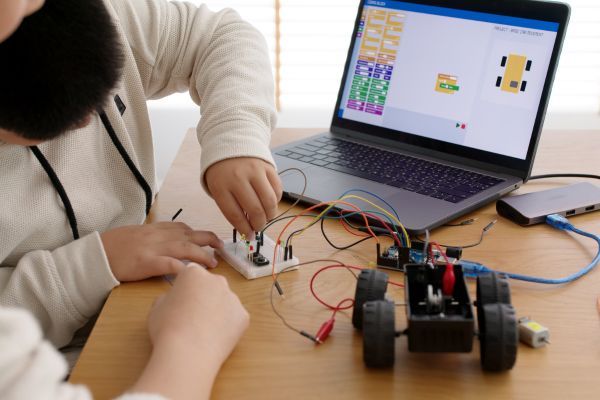
Coding, also known as programming for children, typically involves using age-appropriate tools, platforms, and resources designed to make learning programming concepts engaging and accessible. These resources often incorporate visual programming languages or block-based coding interfaces that allow children to create programs by dragging and dropping blocks of code rather than typing complex syntax.
Children learn computational thinking, problem-solving skills, logical reasoning, creativity, and collaboration. They develop an understanding of how software works and gain the ability to express their ideas through technology. Teaching coding for students also fosters skills such as critical thinking, perseverance, and the ability to break down complex tasks into smaller, manageable parts.
Coding literacy for children is often integrated into school curricula, after-school programs, coding camps, online platforms, and educational games. The goal is to inspire and empower children to become active creators and users of technology, preparing them for the digital world and potential future careers in computer science or related fields.

10 Soft Skills Children Develop When They Learn To Code
Coding can help in many areas as well as improving their understanding of technology. For instance, it can help children become better problem solvers as children must think innovatively to find appropriate solutions. Here are some of the other soft skills that learning to code for children can develop:
- Problem-solving: Coding encourages children to break down complex problems into smaller, manageable parts and develop logical solutions. They learn to analyze issues, think critically, and find creative ways to solve problems.
- Computational thinking: Coding promotes computational thinking, which involves approaching problems in a systematic and logical manner. Children learn to organise and structure their thoughts, consider multiple solutions, and understand cause-and-effect relationships.
- Persistence and resilience: Coding often involves encountering challenges and debugging errors. Children learn to persevere through difficulties, experiment with different approaches, and develop the resilience to keep trying until they find a solution.
- Attention to detail: Programming requires attention to detail and precision. Children learn to pay close attention to syntax, code structure, and small nuances that can impact the functionality of their programs.
- Logical reasoning: Coding helps children develop logical reasoning skills. They learn to think step-by-step, make connections between different elements of a program, and understand the flow of information.
- Creativity: While coding involves following certain rules and guidelines, it also allows for creative expression. Children can explore their imagination and find innovative ways to solve problems or develop unique projects.
- Collaboration: Coding often involves teamwork, especially in group projects or coding clubs. Children learn to collaborate, communicate their ideas, listen to others, and work together towards a common goal.
- Organisation and planning: Writing code requires organisation and planning. Children learn to structure their code, break tasks into smaller components, and manage their time effectively.
- Attention to process and detail: Coding instils an understanding of the importance of process and detail. Children learn to follow instructions, pay attention to coding conventions, and ensure their code is well-structured and readable.
- Analytical thinking: Coding encourages children to think analytically and evaluate the efficiency and effectiveness of their code. They learn to optimize and improve their solutions based on performance and functionality.
By developing these soft skills through coding, children become proficient in programming, enhance their overall cognitive abilities, and acquire valuable skills applicable to various areas of their lives.
Coding For Children Can Help Build Resilience
Resilience is the key to success. It gives us the willpower to continue despite the setbacks we endure. In coding, children are likely to stumble across issues that test their patience, allowing them to build resilience and mental strength. Coding teaches children resilience through debugging, iterative problem-solving, embracing failure as a learning opportunity, and completing complex coding projects.
Children learn to persistently address errors and bugs in their code, iterate on their solutions, and view failures as stepping stones towards success. They develop the ability to bounce back from setbacks, maintain a growth mindset, and remain determined in the face of challenges, fostering their resilience in coding and various aspects of life.
How Coding Literacy For Children is Future Proofing
It is very likely that careers in the future will involve some form of advanced digital skill as AI revolution is changing the way industries operate. According to experts it is predicted that 75% of jobs will be affected by the year 2030. Learning to code at a young age equips children with essential digital skills, enabling them to future-proof their abilities in an increasingly technology-driven world.
By gaining early exposure to coding, children develop a strong foundation in computational thinking, problem-solving, and logical reasoning. These skills are not only relevant to potential careers in computer science but also in various fields where digital literacy is becoming increasingly essential. Moreover, coding fosters adaptability and a growth mindset, preparing children to navigate and embrace technological advancements and innovations that will shape their future.
By engaging in coding education, children can position themselves for success in the digital age and enhance their overall competitiveness in an evolving job market.
How parents can support their children in learning to code
As parents, we always want to support our children’s educational development. Parents can play a crucial role in supporting their children’s journey into coding. Here are some effective ways parents can help:
- Explore Interactive Games: Encourage your child to engage with interactive educational games that introduce coding concepts in a fun and engaging way. Numerous online platforms are designed for kids to learn coding through gamified experiences.
- Utilise Online Tutorials: Take advantage of the vast array of free coding resources available on the internet. Online tutorials, videos, and coding platforms provide step-by-step guidance and exercises for children to learn coding at their own pace. Parents can assist by finding suitable resources and facilitating their child’s learning.
- Consider Additional Coding Lessons: In addition to school-based coding education, consider enrolling your child in additional coding lessons or programs. Self-paced courses or coding clubs can provide structured learning opportunities, additional challenges, and a supportive community for your child to thrive in their coding journey.
- Encourage Website Building: Motivate your child to apply their coding skills by creating their own website. Building a website allows them to practice coding concepts, experiment with design, and showcase their projects. Encourage them to personalize their website with their interests, stories, or even a portfolio of their coding projects.
By actively supporting and facilitating these activities, parents can foster their child’s passion for coding, enhance their learning experience, and provide valuable opportunities for them to practice and showcase their coding skills.
Conclusion to Coding for Children
In conclusion, it is important to acknowledge that coding is not without its challenges. Learning to code requires dedication, perseverance, and a willingness to tackle complex problems. However, despite its difficulties, coding offers immense benefits to children. It empowers them with valuable digital skills, nurtures their problem-solving abilities, and fosters a mindset of resilience and adaptability.
By embracing coding as a challenging yet rewarding endeavour, parents can support their children in developing the skills needed to thrive in an increasingly technology-driven world. So, let us recognize the difficulties and embrace the opportunities that coding presents for our children’s future. With the right support and encouragement, they can overcome the challenges and embark on a transformative journey that will future-proof their skills and open doors to exciting possibilities.
With practice and the advice above, children can gradually develop their understanding of basics and build the confidence to code.






Leave A Comment